

If you struggle with energy dips, cravings or bloating, the way you balance your plate (especially your protein) can make a big difference to how you feel day to day.
Protein is one of the most important nutrients for supporting overall health. It plays a key role in building and repairing muscles, maintaining healthy skin and hair, supporting immune function, and helping you stay full after meals.
Despite its importance, many people struggle to understand how much protein they actually need and what that looks like in everyday meals.
In this guide, I will break down optimal protein intake, provide a list of high-protein foods, and show you practical meal ideas that provide 20–30 g of protein per meal.
How Much Protein Do You Need?
Your exact needs depend on age, activity levels and health, but general guidelines suggest:
Most adults: ~ 0.8 g protein per kg body weight per day.
Older adults (65+): ~ 1.0–1.2 g per kg to help prevent muscle loss.
Very active adults/athletes: 1.4–2.0 g per kg, depending on training intensity.
A practical strategy is to aim for 20–30 g of protein at each main meal.
Spreading protein intake evenly across the day helps:
Support muscle maintenance
Improve satiety and reduce snacking
Support metabolic health
Stabilise blood sugar levels
High Protein Foods
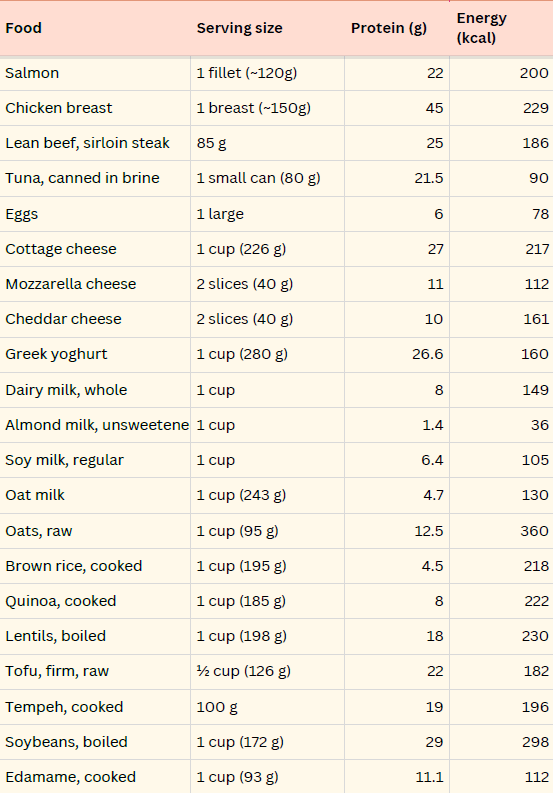
What Does 20–30g of Protein Look Like in a Meal?
A simple approach to meeting your protein needs is to include one main protein source at each meal and combine it with whole grains, vegetables, and healthy fats.
Breakfast Ideas:
Overnight Oats: 30-40g rolled oats, protein powder, 1 tbsp greek yoghurt, 1 tsp chia seeds, handful berries (~30g protein)
Eggs on Toast: 2 eggs, 2 slices rye sourdough, ½ avocado, 2 tbsp cottage cheese (~20g protein)
Lunch Ideas:
Chicken Salad Bowl: 90g chicken, mixed salad + veg of choice, ½ cup quinoa, sprinkle feta cheese, olive oil dressing (~40g protein)
Tuna wrap: Tin tuna (80g), wholegrain wrap, salad leaves/veg of choice, 2 tbsp mixed beans (~25-30g)
Dinner Ideas:
Salmon Bowl: Salmon fillet, ½ -1 cup cooked brown rice, avocado, tomato, ¼ cup roasted chickpeas (~35g protein)
Turkey Stir Fry: 150-200g turkey mince, veg of choice, honey-soy dressing, ½ -1 cup brown rice (~30-40g protein)
For gut health, I encourage clients to pair their protein with fibre-rich foods (like vegetables, wholegrains, beans and fruit) to support a diverse microbiome and steadier energy throughout the day.
Want Personalised Support?
If you’d like help working out your own protein needs, especially if you’re dealing with digestive symptoms, hormonal issues or blood sugar dips, I offer personalised 1:1 nutrition support to uncover the root causes and support better digestion, energy and hormone health.
You can learn more about my 1:1 packages here.